
Skip to content
Choosing a domain

How to choose a domain name

You buy it once and live with it for a decade. Six rules that hold up, two that do not, and an honest answer to whether you need one yet.

Takes less than a minute · no sign-up or credit card required
a lip tattoo and a nose ring A real Clay site, built from a Google listing

A domain is the cheapest thing in the business and the hardest to change. Everything else on a website can be redone in an afternoon; the address is on your window, your van, your cards and every review anyone has ever left with a link in it.

The good news is that almost none of the advice matters. Keywords in the domain stopped moving rankings a long time ago, the extension matters less every year, and length matters only up to the point where somebody has to read it down a phone line. What is left is short, sayable, spellable, and yours, and the last of those is the one people get wrong, because they let somebody else register it for them.

The free address, or your own name

Both are real addresses that anybody can open. This is the decision, not a sales table, the free column wins two of these rows.

name.clay.siteYour own domain
Live at a real address anyone can open
name.clay.siteYes
Your own domainYes
Costs nothing, ever
name.clay.siteYes
Your own domainNo—
Nothing to renew and nothing to expire
name.clay.siteYes
Your own domainNo—
Ready before you have decided on a name
name.clay.siteYes
Your own domainNo—
Your name on the sign, the van and the cards
name.clay.siteNo—
Your own domainYes
Email at your own name
name.clay.siteNo—
Your own domainYes
Moves with you if you ever leave
name.clay.siteNo—
Your own domainYes
No "Made with Clay" badge in the footer
name.clay.siteNo—
Your own domainYes

The six that hold up

  • Say it out loud to somebody who has not seen it written
  • One spelling only, no hyphens, no numbers, no doubled letter across two words
  • Short enough to fit on a sign, long enough to be free
  • Your trading name, not a description of your trade
  • Registered in YOUR name, at a registrar you can log into
  • Check the social handles before you buy, not after
a tattooed torso and arm in low light
The rule everyone breaks

It must survive being said down a phone

Every domain that causes trouble causes it in the same moment: somebody says it aloud and the person writing it down gets it wrong. "Bakers-and-co" becomes bakersandco. "Café" becomes cafe. "4U" becomes foryou. A hyphen is invisible in speech and a number has two spellings.

The test costs nothing. Say the domain to somebody who has not seen it written and watch them type it. If they hesitate once, it is the wrong name, and you will hear that hesitation several times a week for as long as the business exists.


a tattooist working on a full sleeve
The one that costs money later

It has to be registered in your name

A domain sitting in a designer's account, an agency's account or a former partner's account is not yours, whatever the invoice says. It becomes a problem at exactly the worst moment: when you want to leave, when they stop answering, or when the renewal fails and nobody notices for a week.

Buy it yourself, at any registrar you like, with your own card and your own email on the account. It is ten or fifteen a year and it is the cheapest insurance in the business. We do not sell domains and have no opinion about which registrar, what matters is whose login it is.

a tattooed hand holding an espresso
The honest answer

You do not need one to start

A Clay site is live at name.clay.site the moment it exists, and that is a real address: you can put it in a bio, text it to somebody, print it. Plenty of businesses run on it for months while they argue about the name.

Connect your own domain whenever you buy one and the old address keeps working, so nothing you have already handed out breaks. That is the order that costs you nothing: build the site, live with it, name it when you are sure.

Your photographs, already sorted

Clay reads the pictures on your Google listing, grades them, crops them for the shape each band needs and puts the best one at the top. Nothing to upload, nothing to resize.

a tattooed hand drawing roses
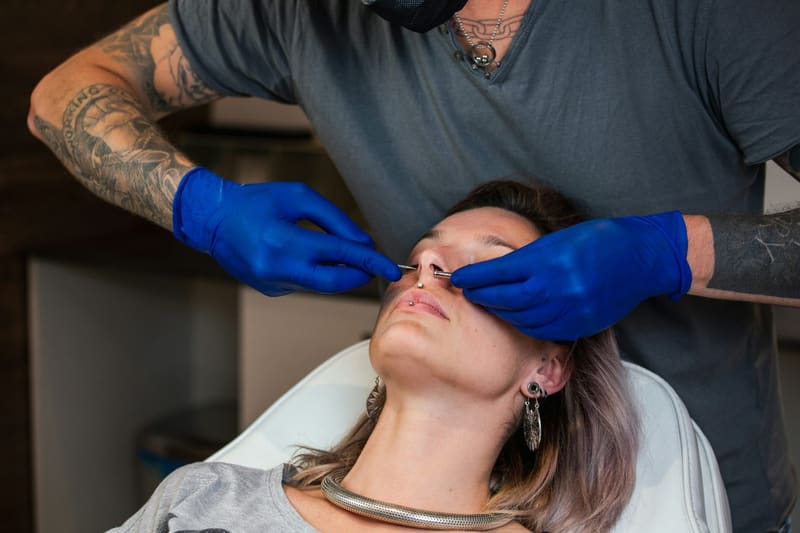
gloved hands doing a facial piercing
a piercing tray and gloved hands
a tattooed man in a black vest
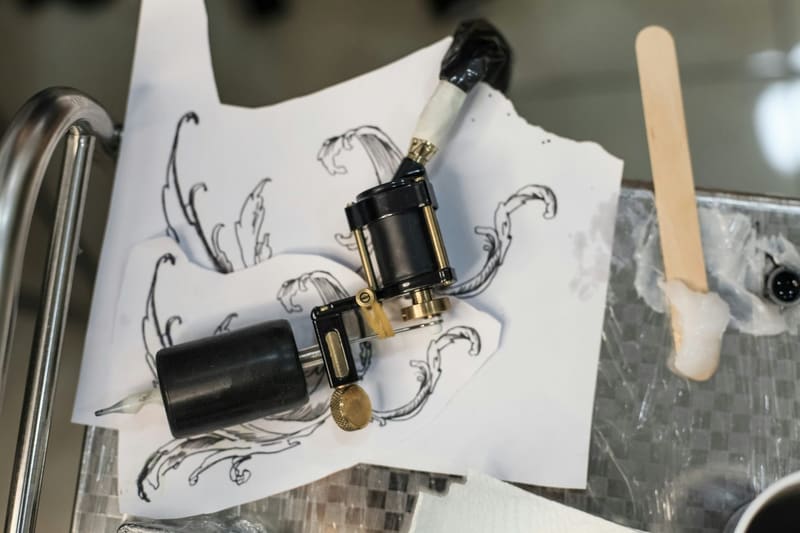
a tattoo machine on a stencil sheet

Two rules you can ignore

Keywords in the domain

bestpizzaamsterdam.com does not outrank a restaurant with a good profile and real reviews, and it reads like an advert rather than a business. Google stopped treating the domain as a keyword signal a long time ago.

"It has to be a .com"

It has to be one people can remember. A country extension where you trade, or the one your trade actually uses, is fine, and a good short name on a .nl beats an awkward one on a .com every day.

What it looks like when it is live

Drawn rather than described, the page, the address, and what it can switch on.

In a search result
Found the way people actually look
yourtattoostudio.clay.site
Tattoo studio
Open now · rating and reviews from Google · map and directions
Your address
Free to start, your own name when you want it
https://yourtattoostudio.clay.site
Free foreverYour own domain, included on Pro

Questions

Do I have to buy a domain to use Clay?

No. Every site is live and free at its own name.clay.site address with a small badge in the footer, and it stays that way for as long as you like. What free covers and what it does not is the whole list.

Where should I buy the domain?

Anywhere you like, any registrar, any extension. We do not sell domains and take no cut, so there is nothing to steer you towards. What matters is that the account is in your name with your own email on it.

What happens to my clay.site address if I connect my own?

It keeps working. Anything you have already printed, texted or put in a bio goes on resolving, and the certificate for the new name is issued for you.

Should the domain match my Google listing name?

As closely as it can. A site whose name matches the profile is a second statement that agrees with the first, which is worth more than one that contradicts it, see how to show up on Google Maps.

Is a longer domain bad for SEO?

No, and neither is a short one good for it. Length matters for the person reading it off a van, not for a search engine. Spend the effort on the profile and the reviews instead: the website SEO checklist.

What if the name I want is taken?

Try the extension before you try a variation. A clean name on a country extension is better than the same name with a hyphen, a number or an extra word on a .com, all three of which fail the say-it-out-loud test.

Try it with your business

Search your business and see your site in seconds, free, no signup.

Takes less than a minute · no sign-up or credit card required